Choosing between a galley, L-shaped, or open-concept kitchen isn’t just a style preference. In San Diego, your home’s age, neighborhood, and floor plan often decide which kitchen layout ideas San Diego homeowners can actually pull off. This guide breaks down each layout by cost, fit, and real-world ROI so you can make the right call before you spend a dollar on demo.
How San Diego’s Housing Stock Shapes Your Kitchen Options
In San Diego, the neighborhood you live in largely determines which kitchen layout makes sense for your home. The city’s housing stock spans nearly a century of construction styles, from the compact Craftsman bungalows built in the 1920s in Mission Hills and North Park to the sprawling new construction in Otay Ranch, Rancho Bernardo, and Carmel Valley. Those differences aren’t cosmetic. They dictate your wall placement, your square footage, and your structural options.
Older homes in South Park, University Heights, and Kensington were built before open-concept living was a thing. Kitchens in these homes are often enclosed rooms, sometimes just 80 to 120 square feet, separated from the living space by load-bearing walls. That changes everything about what a remodel can realistically achieve.
Newer builds in master-planned communities like Eastlake or San Elijo Hills often already have semi-open layouts. In those homes, you’re frequently starting from a better baseline, which means a full open-concept conversion costs less and causes fewer structural surprises.
So before you fall in love with an open kitchen on Pinterest, start with your home’s actual bones. Get a contractor to assess your wall structure before you commit to any layout. A knowledgeable local remodeler will know whether the wall between your kitchen and dining room is load-bearing the moment they look at your floor plan.
Galley Kitchens: The Right Call for Smaller San Diego Homes
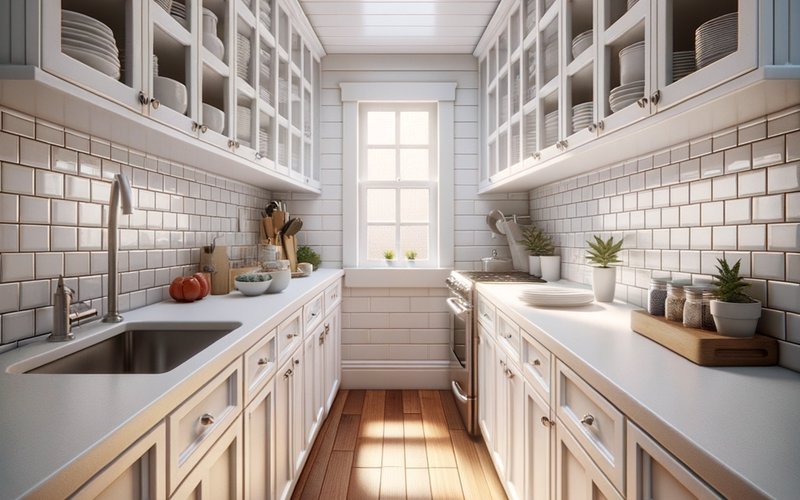
A galley kitchen is two parallel runs of cabinetry and countertops with a single corridor between them. It’s efficient, compact, and honestly underrated. In San Diego’s older neighborhoods, it’s often the most practical layout available.
Why Galley Kitchens Work in Mission Hills, North Park, and Similar Areas
In a bungalow or early mid-century home, you’re often dealing with a kitchen footprint that’s 8 to 10 feet wide and no more than 12 feet long. An L-shaped or island layout won’t physically fit in that space. A galley kitchen works with that narrow footprint instead of fighting it.
And the cost is genuinely lower. A galley kitchen remodel in San Diego typically runs $18,000 to $38,000, depending on materials and finishes. You’ve got two walls to work with, a straightforward plumbing layout, and no structural modifications needed in most cases. That makes labor and design fees simpler too.
The trade-off is traffic flow. Galley kitchens don’t work well if two or three people cook simultaneously. But for a couple or a single-person household in a 1920s North Park home, it’s not just acceptable, it’s ideal. You’re not compromising. You’re being smart about your square footage.
A homeowner in Mission Hills recently completed a galley remodel for around $24,000, upgrading to quartz countertops, new shaker-style cabinets, and a single-bowl undermount sink, all within the original footprint. No permits needed beyond the standard kitchen remodel permit from the City of San Diego Development Services Department.
L-Shaped Kitchens: The Versatile Middle Ground
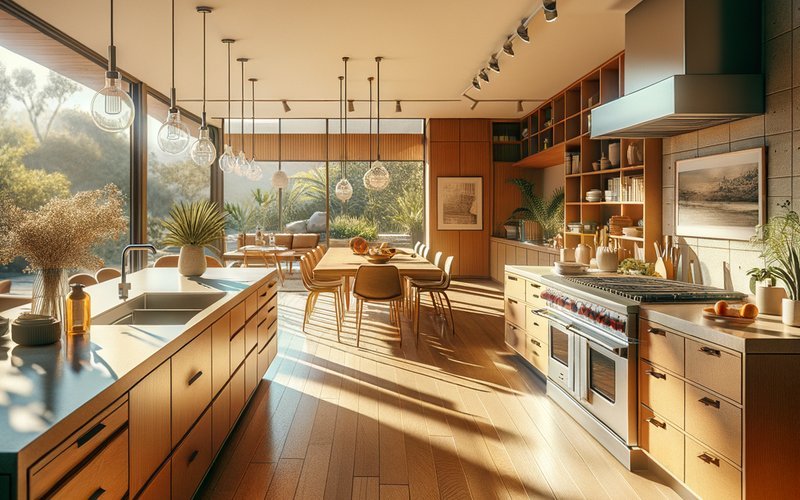
An L-shaped kitchen uses two adjoining walls at a 90-degree angle, leaving the remaining floor space open. It’s the most common layout in homes built between the 1970s and 1990s, which makes it very common in areas like Mira Mesa, Tierrasanta, and Serra Mesa.
The L-shape works in mid-size kitchens, roughly 150 to 250 square feet, and naturally allows a dining table or breakfast nook to sit adjacent to the cooking zone. You get a defined kitchen space without closing it off entirely from the rest of the home. That’s a nice middle ground for families who want connectivity without a full open-concept demolition.
Cost and Practical Considerations for L-Shaped Remodels
In San Diego, an L-shaped kitchen remodel runs $25,000 to $55,000 depending on how much you change. If you’re working within the existing footprint, costs stay on the lower end. If you want to add an island or extend one leg of the L, you’re looking at structural and flooring work that pushes the budget higher.
The corner cabinet is the one consistent headache with L-shaped kitchens. Lazy Susans help, but deep corner cabinets waste storage if they’re not designed carefully. Ask your contractor about pull-out drawer systems for corners. It adds maybe $600 to $1,200 to your cabinet budget but saves you from that annoying dead zone where stuff just disappears.
For 1980s homes in Clairemont or Scripps Ranch, an L-shaped remodel is often the sweet spot. You’re updating the look, improving function, and staying within a footprint that doesn’t require major structural work. It’s a smart, budget-conscious move with solid resale appeal in those neighborhoods.
Open-Concept Kitchens: What San Diego Buyers Actually Want

Open-concept kitchens consistently rank as the top buyer preference in the San Diego market. Real estate data and local agent feedback both point the same direction: homes with open kitchen-to-living connections sell faster and at higher prices, particularly in newer communities.
But here’s what a lot of homeowners don’t hear upfront. Creating an open-concept kitchen from a closed or semi-closed layout requires removing walls. And wall removal in San Diego is not cheap or simple. If the wall is load-bearing, you’ll need a structural beam, a permit, engineering drawings, and inspections. That adds $8,000 to $20,000 to your project just for the structural work, before you touch a single cabinet.
Where Open-Concept Remodels Make Financial Sense
In newer San Diego suburbs like Otay Ranch, Chula Vista, and San Marcos, homes are already designed with more flexible floor plans, and wall removal is less likely to hit structural complications. In these areas, a full open-concept kitchen remodel might run $45,000 to $85,000, and the ROI is strong because buyers in those zip codes specifically expect that layout.
In contrast, trying to open up a 1930s bungalow in Bankers Hill can get expensive fast. Older construction sometimes has unexpected load-bearing elements, outdated wiring that needs relocation, and plumbing that runs through walls you want to remove. Budget conservatively and build in a contingency of at least 10 to 15%.
If you’re planning this kind of project, the City of San Diego Development Services Department requires a building permit for any structural wall removal. You’ll also need plans from a licensed engineer. For a deeper look at what the permit process involves, the guide on whether you need a permit for a kitchen remodel in San Diego is worth reading before you start.
Side-by-Side Layout Comparison: Cost, ROI, and Best Fit
Here’s a straight comparison of all three layouts across the metrics that matter most for San Diego homeowners deciding where to put their remodel budget.
| Layout | Typical Cost in San Diego | Best For | Avg. ROI | Key Pros | Key Cons |
|---|---|---|---|---|---|
| Galley | $18,000 – $38,000 | Bungalows, narrow footprints, older neighborhoods (Mission Hills, North Park) | 60–70% | Low cost, efficient workflow, no structural work | Limited for multi-cook households, no island option |
| L-Shaped | $25,000 – $55,000 | Mid-size homes, 1970s–90s builds (Clairemont, Mira Mesa, Tierrasanta) | 65–75% | Natural dining adjacency, works in most floor plans | Corner storage issues, limited traffic flow |
| Open-Concept | $45,000 – $85,000+ | Newer suburbs, larger homes, buyers-focused remodels (Otay Ranch, Carmel Valley) | 75–85% | Highest buyer demand, best resale value, modern feel | High cost, structural complexity, permit required |
These ranges reflect mid-grade finishes. Go with custom cabinetry, high-end appliances, or premium stone countertops and your numbers will climb across all three categories. The ROI figures are based on San Diego-area resale data and typical contractor feedback, not national averages.
- Galley: Best when your priority is cost control and you’re working with a narrow kitchen footprint
- L-Shaped: Best when you want more function without major structural changes
- Open-Concept: Best when you’re targeting resale value and your home’s structure supports it
Which Layout Delivers the Best ROI in San Diego’s Market?
Open-concept kitchens deliver the highest resale value in San Diego when the home’s floor plan and neighborhood support them. In communities like Carmel Valley, Del Sur, and Rancho Bernardo, homes with open kitchen-living areas routinely command $30,000 to $60,000 more in resale price compared to similar homes with closed kitchen layouts, based on recent local comp data.
But the honest answer is that ROI depends on your starting point. If you’re spending $70,000 to create an open-concept kitchen in a home that will sell for $850,000, that investment makes sense. If you’re dropping $65,000 on an open-concept remodel in a neighborhood where comps top out at $620,000, you’ve over-improved your property and won’t get it back.
For tight budgets or older homes, a well-executed galley or L-shaped kitchen remodel is often the smarter financial play. A clean, updated galley kitchen with quality finishes in a North Park home can add $20,000 to $30,000 to your sale price at a fraction of the cost of structural work. That’s a better return on a per-dollar basis than a full open-concept conversion in the same neighborhood.
If you’re weighing kitchen improvements against other renovation projects, this breakdown of kitchen vs. bathroom renovations in San Diego gives useful context on where your money works hardest in this specific market.
Working with a contractor who knows San Diego’s neighborhoods, not just construction in general, is what separates a well-targeted remodel from a costly mistake. If you’re researching your options, looking at what local firms offer for kitchen remodeling in San Diego is a practical starting point for understanding scope and realistic pricing.
How to Choose the Right Layout for Your San Diego Kitchen Remodel
Start with your actual square footage, not your wish list. Measure your kitchen, note every doorway, window, and wall that can’t move, and be honest about what your floor plan realistically allows. A lot of homeowners fall in love with a layout that simply doesn’t fit their space.
Match Your Layout to Your Lifestyle
Think about how you actually use your kitchen. Do you cook solo most nights? A galley is genuinely great for that. Do you host regularly and want guests to hang out while you cook? Open-concept earns its premium. Do you have kids doing homework at a nearby table while dinner happens? An L-shaped layout with a dining nook solves that problem cleanly and affordably.
And don’t overlook your timeline. Open-concept remodels in San Diego typically take 8 to 14 weeks from permit approval to final inspection. A galley or L-shaped remodel within the existing footprint can often be completed in 4 to 8 weeks. If you’re prepping to list your home, that timeline matters. You can find a full breakdown of what to expect in the 2025 San Diego kitchen remodel timeline guide.
Get a Local Contractor Assessment Before You Commit
Before you finalize any layout decision, get a licensed San Diego contractor to walk your home. They’ll spot load-bearing walls, existing plumbing runs, and permit requirements that can change your budget significantly. A good assessment takes about an hour and can save you from a $15,000 surprise mid-project.
Ask specifically about permit requirements from the City of San Diego Development Services Department, especially if you’re considering wall removal. Unpermitted structural work can create real problems when you go to sell. It’s not worth the shortcut.
For broader renovation planning across your home, the San Diego room addition planning guide covers how to think about structural changes and what the permitting process actually looks like from start to finish.
Frequently Asked Questions
What is the most popular kitchen layout in San Diego homes?
The L-shaped kitchen is the most common layout in San Diego homes, particularly in properties built between the 1970s and 1990s in neighborhoods like Mira Mesa, Clairemont, and Tierrasanta. Open-concept kitchens are now the most requested layout in new remodel projects, especially in newer communities like Otay Ranch and Carmel Valley.
How much does it cost to convert a galley kitchen to open-concept in San Diego?
In San Diego, converting a galley kitchen to an open-concept layout typically costs $45,000 to $90,000. That range includes structural wall removal, a load-bearing beam if required, permits from the City of San Diego Development Services Department, and updated cabinetry and finishes. Structural work alone adds $8,000 to $20,000 to the base kitchen remodel cost.
Do I need a permit to remove a wall for an open-concept kitchen in San Diego?
Yes. In San Diego, removing a wall to create an open-concept kitchen requires a building permit from the City of San Diego Development Services Department. If the wall is load-bearing, you’ll also need stamped structural engineering drawings and a licensed contractor to perform the work. Permits typically take 2 to 6 weeks to approve depending on project complexity.
Which kitchen layout adds the most resale value in San Diego?
Open-concept kitchens add the most resale value in San Diego, particularly in newer suburban communities like Carmel Valley, Del Sur, and Rancho Bernardo, where buyers specifically expect this layout. Open-concept remodels in these areas can increase sale prices by $30,000 to $60,000 compared to similar homes with closed layouts. In older, smaller neighborhoods, a well-finished galley or L-shaped remodel often delivers better ROI on a per-dollar basis.
Is an L-shaped or galley kitchen better for a small San Diego home?
For small San Diego homes under 1,200 square feet, particularly bungalows and mid-century homes in Mission Hills, North Park, and South Park, a galley kitchen is usually the better fit. It works efficiently in narrow footprints under 10 feet wide and costs less than an L-shaped remodel. An L-shaped layout works better when you have at least 150 square feet of kitchen floor space and a corner wall configuration to work with.
How long does a kitchen layout remodel take in San Diego?
In San Diego, a galley or L-shaped kitchen remodel within the existing footprint takes 4 to 8 weeks from demo to completion. An open-concept remodel that involves wall removal, structural work, and permits typically takes 8 to 14 weeks. Permit approval from the City of San Diego Development Services Department adds 2 to 6 weeks before construction even begins, so factor that into your timeline planning.