
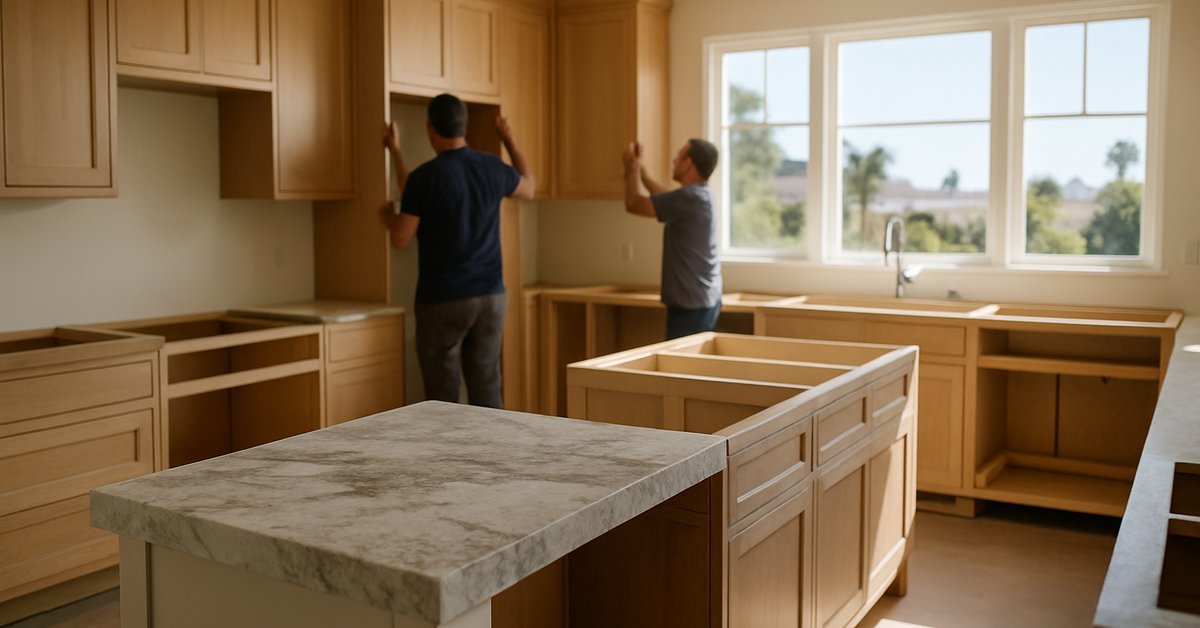
Understanding how to hire a luxury remodeling contractor in San Diego is critical knowledge before you commit to a $200K remodel — hiring the wrong one isn’t just a bad experience, it can derail your project for years. The luxury remodeling market here operates by different rules than a typical renovation hire, and most homeowners don’t realize that until they’re already stuck in a dispute. This guide covers exactly what to verify before you sign anything: license classifications, contract law, permit timelines, and the specific red flags that show up most often in high-end San Diego jobs. If you want a free estimate from a licensed San Diego contractor before you decide, here’s what the numbers actually look like for a high-end remodel.
What Makes Hiring a Luxury Contractor in San Diego Different From a Standard Remodel?
Knowing how to hire a luxury remodeling contractor in San Diego starts with understanding the stakes are genuinely different. A $20K bathroom refresh and a $300K whole-home remodel aren’t the same type of hire — and treating them the same is where homeowners get burned.
In the luxury tier, you’re typically dealing with larger upfront deposits, multiple subcontractor teams working concurrently, and a project timeline that stretches 6 to 18 months. That’s a long time to have significant money on the table with someone you’ve vetted for maybe two hours. The financial exposure alone changes how carefully you need to check credentials.
San Diego adds another layer. Many of the city’s high-end remodel projects sit in neighborhoods like La Jolla and Rancho Santa Fe, where coastal overlay zones and community plan review processes can trigger permitting requirements you simply don’t encounter in inland projects. A contractor who does great work in a non-coastal neighborhood may not have the experience to manage a Coastal Development Permit — and that gap can add 8 to 16 weeks to your project schedule.
And the subcontractor web is more complex at this level. A luxury remodel often involves a general contractor plus a dedicated tile setter, cabinetry fabricator, plumbing sub, electrical sub, and sometimes a structural engineer working in sequence. When one of those relationships is mismanaged, the whole schedule collapses. That coordination is a skill set you’re paying for — and something to probe directly during any interview.
Which CSLB License Classifications Should a San Diego Luxury Contractor Actually Hold?
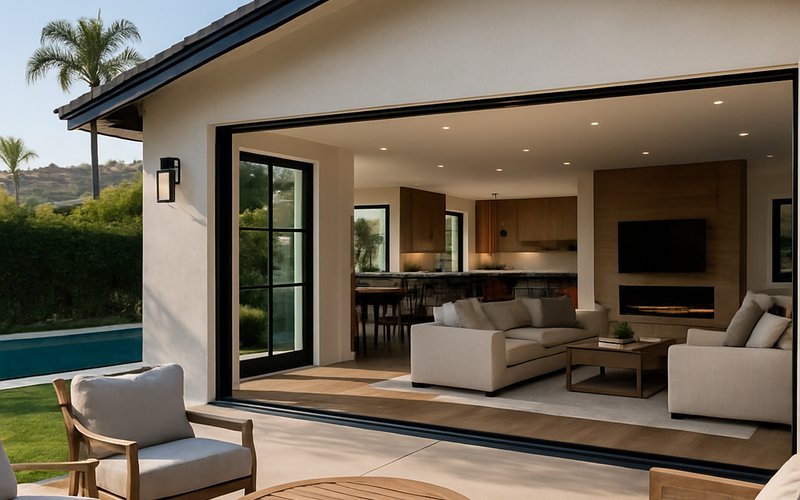
In California, any contractor doing structural or multi-trade work on a job over $500 must hold a license issued by the Contractors State License Board. For a $150K+ remodel in San Diego, the minimum acceptable credential is a Class B General Building Contractor license. This is non-negotiable.
A B license allows a contractor to take on projects involving two or more unrelated trades — framing, drywall, tile, and so on. A design-build firm handling a full-scope remodel must hold this at minimum. You can verify any California contractor’s license status at contractors.cslb.ca.gov — search by license number or business name and confirm the license is active, not suspended, and bonded.
Specialty Trade Licenses to Ask About
Depending on your project’s scope, you’ll also want to confirm that specialty trade work is covered by licensed subs. Relevant classifications include:
- C-8 (Concrete): Required if your project involves structural concrete pours, footings, or hardscape attached to the structure
- C-10 (Electrical): Required for panel upgrades, rewiring, or any new circuit work — this matters in whole-home remodels with updated lighting packages
- C-36 (Plumbing): Required for rough plumbing, gas line work, or bathroom additions
- Workers’ Compensation Certificate: Separate from the CSLB license — ask for this document specifically
Honestly, an unlicensed handyman might be perfectly fine for a $2,000 fence repair. But for a $300K remodel in Del Mar, there’s no version of “he comes highly recommended” that replaces a valid B license, active workers’ comp, and current general liability coverage. If the license lookup shows anything other than “Active,” walk away.
What Should a Proper Luxury Remodeling Contract Include in San Diego?
Under California Business & Professions Code Section 7159, any home improvement contract over $500 must meet specific written requirements. In the luxury tier, a contract that just barely meets the legal minimum isn’t good enough — you need detail at every line.
One thing many San Diego homeowners don’t know: California law caps the initial deposit at 10% of the total contract price or $1,000, whichever is less. Some luxury contractors will try to argue that their project complexity justifies a larger upfront payment. It doesn’t — the law is clear, and a contractor who pushes back on this is showing you something about how they operate.
| Contract Element | Why It Matters | Red Flag If Missing |
|---|---|---|
| Itemized scope of work | Defines exactly what is and isn’t included — prevents “I thought that was covered” disputes | Vague scope creates unlimited change order exposure |
| Milestone-based payment schedule | Ties your payments to verified work completion, not calendar dates | Date-based payments let contractors get paid before work is done |
| Lien release provisions | Protects you from subcontractors placing liens on your home if the GC doesn’t pay them | You can legally owe money twice without this protection |
| Defined allowances with dollar amounts | Prevents “cabinets TBD” language that always costs more than estimated | Budget overruns are nearly guaranteed without specific allowance figures |
| Change order process in writing | Requires written approval and pricing before any scope changes begin | Verbal change orders routinely end in billing disputes |
| Design drawings as exhibits | The contract should reference specific plan sets, so both parties agree on what’s being built | Drawings attached as “to be determined” create interpretation gaps |
| Subcontractor disclosure | You have the right to know who is working in your home and under what terms | Unnamed subs create insurance and lien liability gaps |
Don’t let a contractor rush you through contract review. If they’re sending you a 40-page document and want a signature by Friday, that’s a red flag on its own. A good contractor expects you to read it.
What Are the Biggest Red Flags in the $150K+ Remodel Market in San Diego?
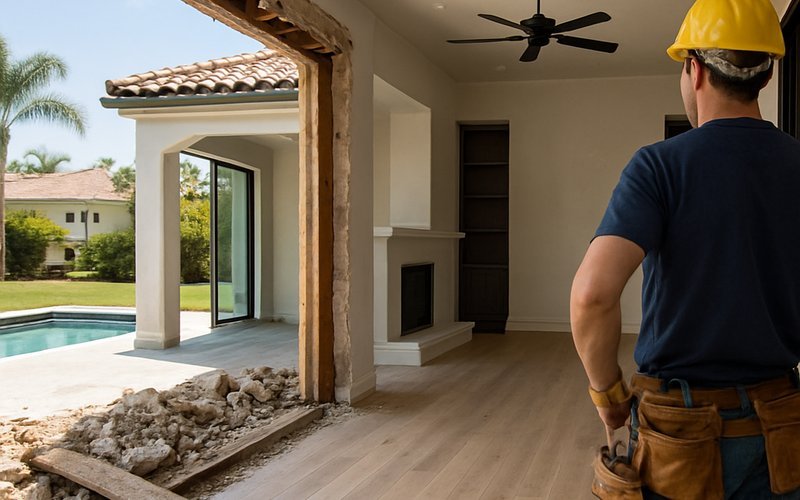
The luxury remodeling market in San Diego has specific failure patterns that show up over and over. Knowing them before you hire is the whole game.
Vague allowance language. If your contract says “kitchen cabinets — allowance TBD” or “tile — per homeowner selection,” you have no budget anchor. A homeowner in Scripps Ranch signed a contract with undefined finish allowances across the kitchen, primary bath, and powder room. By the time framing was complete, she was already $60,000 over budget — not from fraud, but from the allowance gaps she’d never negotiated into real numbers. Get every allowance as a specific dollar figure before you sign.
No permit discussion upfront. Any contractor who doesn’t bring up the City of San Diego Development Services Department in the first meeting for a full-scope remodel is either inexperienced or hoping you won’t ask. Permits aren’t optional — they protect you legally and ensure inspections happen at each structural phase.
Pressure to skip plan check. Some contractors pitch “we can move faster if we don’t pull permits.” Faster, yes. But you’ll face disclosure requirements when you sell, potential stop-work orders, and mandatory demolition of unpermitted work. Never skip it.
Unusually low bids. If three bids come in at $280K, $295K, and $180K, the low bid isn’t a deal — it’s a signal. Either scope is missing, materials are substituted, or the estimator doesn’t know what the job actually costs. The cheaper option isn’t always fraud. Sometimes it’s just an inexperienced estimator, which is almost as bad when you’re the one left mid-project with no contractor and no recourse.
No dedicated project manager. For any job over $150K, you should have a named individual responsible for day-to-day coordination. “The owner handles it” is not good enough when four trade teams are on-site simultaneously.
How Does San Diego’s Permit Process Affect a High-End Remodel Timeline?
Knowing how to hire a luxury remodeling contractor in San Diego means understanding that the permit process isn’t a formality — it’s a schedule driver. The City of San Diego’s Development Services Department (DSD) handles plan check review, and timelines vary significantly based on project scope and location.
For standard inland projects, a full plan check typically takes 4 to 8 weeks. But if your project sits in a coastal overlay zone — La Jolla, Ocean Beach, or Pacific Beach, for example — you’ll likely need a Coastal Development Permit in addition to the standard building permit. That adds 8 to 16 weeks to your overall timeline. This is not a contractor problem; it’s a regulatory reality you need to plan around from the start.
| Phase | Estimated Duration | What Happens |
|---|---|---|
| Design & Drawings | 4–10 weeks | Architect or designer produces permit-ready construction documents |
| Permit Submittal to DSD | 1–2 weeks | Documents submitted; DSD assigns plan check number and queue position |
| Plan Check Review | 4–8 weeks (standard); 8–16 weeks additional for coastal | DSD reviews for code compliance; may issue correction comments requiring resubmittal |
| Permit Issuance | 1–3 weeks after approval | Permit fees paid, permit card posted on-site, construction can begin |
| Construction | 3–12 months depending on scope | Trade sequencing, milestone inspections, framing through finish work |
| Final Inspection | 1–3 weeks | DSD inspector signs off; certificate of occupancy or final approval issued |
The DSD does offer an Over-the-Counter plan check option for simpler scopes, which can get you a permit in a single appointment. But for a full-home luxury remodel, you’re almost certainly on the standard track. A skilled contractor files concurrently with design — submitting to the DSD while final design details are still being resolved — to compress the overall schedule rather than treating permit filing as an afterthought after design is done.
What Does a Trustworthy Design-Build Process Actually Look Like in San Diego?
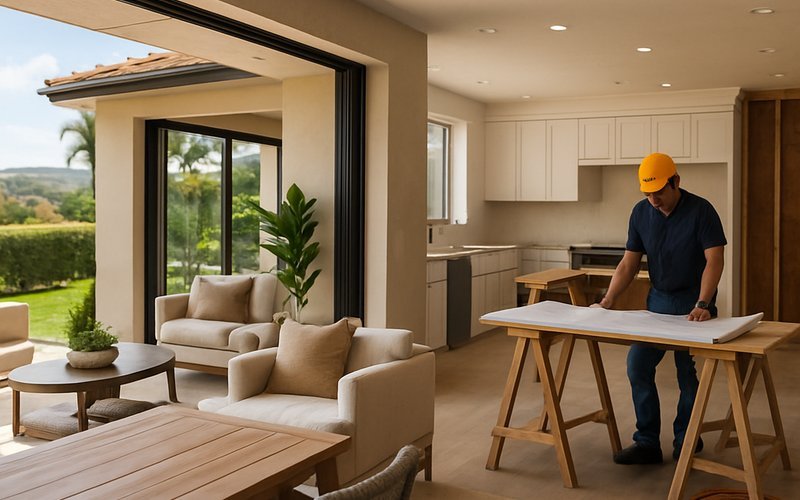
The design-build model keeps design and construction under one contract with one firm. That structure eliminates the most common source of high-end remodel failures: the communication gap between an architect who drew something and a contractor who builds something slightly different.
A well-run design-build process in San Diego follows a clear sequence. It starts with a discovery meeting where the firm assesses your scope, priorities, and budget range honestly. Then comes a preconstruction agreement — a paid phase covering design development, structural assessments, and permit documentation. This fee is typically $5,000–$15,000 for a major remodel and signals that the firm is doing real work, not giving away design for free to lock in the build contract.
From there, design development moves through schematic design to permit-ready construction documents. The firm files with the DSD while any final finish selections are still being made, which keeps the schedule moving. Once permits are issued, construction begins with milestone sign-offs at key phases: framing, rough mechanical, insulation, drywall, and finishes. The project closes with a formal punch list and final walkthrough.
A recent project in Mission Hills illustrates this well. A homeowner undertook a whole-home remodel of a 1940s Craftsman, touching the kitchen, two bathrooms, and the structural rear wall. Because the design-build firm managed both phases, the permit drawings reflected exactly what was being built — no discrepancies between plan and field, no costly design changes mid-construction. Total schedule from first meeting to final inspection ran 11 months. A comparable design-bid-build process on a similar scope typically adds 3 to 5 months of coordination friction.
If you’re comparing firms, Royalty Design Build is a San Diego design-build contractor that manages both the design and construction phases under one roof — the kind of integrated structure that reduces the miscommunication risk on high-end jobs. For anyone planning a full-scope luxury remodel, that single-firm accountability is worth understanding before you decide on your delivery model.
How Do You Vet and Compare Luxury Remodeling Contractors in San Diego?
Knowing how to hire a luxury remodeling contractor in San Diego comes down to one thing: asking the right questions before anyone picks up a pen. Here’s a practical checklist for every firm you interview.
- Verify the CSLB license at contractors.cslb.ca.gov: Confirm active status, bond, and no disciplinary actions
- Request a workers’ compensation certificate: Not just a verbal confirmation — the actual certificate of insurance
- Ask for 3 references from jobs over $100K: Call them. Ask specifically about schedule accuracy, communication, and how change orders were handled
- Visit a current or recently completed jobsite: A clean, organized site reflects how a contractor manages complexity
- Review a sample contract before signing: A firm that won’t share a sample contract before you’re committed is hiding something
- Confirm they pull their own permits: If they suggest you pull permits as the owner-builder, that shifts liability to you — don’t accept it
- Ask who the dedicated project manager is by name: Get their direct contact. Confirm they’ll be on-site regularly, not just at kickoff
- Verify general liability coverage of at least $1M: Request the certificate directly from their insurer
In neighborhoods like Coronado and Point Loma, where high-end remodels are common, you should be able to get local references without difficulty. A contractor who’s done quality work in these areas will have clients willing to talk. If references are vague, out of area, or hard to reach, that’s a signal worth taking seriously.
And don’t discount gut feel at the first meeting. Do they listen more than they talk? Do they ask about your priorities, your timeline, your lifestyle during construction? A contractor who jumps straight to numbers without understanding your project isn’t ready to run yours. If a contractor can’t answer these questions clearly in the first meeting, keep looking.
Ready to start vetting? Here’s a deeper look at what to expect from a full home renovation in San Diego, including how to prepare your household for the construction phase. You can also read more about navigating San Diego building permits before your first contractor conversation. The more informed you walk in, the better your outcomes — and the easier it is to spot the contractors who aren’t ready for a job at this level.